Most people who call us about building a padel court start with the same question: what does it cost? That’s a key question, but the more important thing to understand first is what a padel court build actually involves, because it is not like building a tennis court or a pickleball court. There are more moving parts, more vendors, and more ways for a project to go sideways if nobody is coordinating the full picture.
This guide walks through every phase of a padel court build in the US, what happens at each step, what you need to plan for, and where most first-time builds run into trouble.
What Is a Padel Court Actually Made Of?
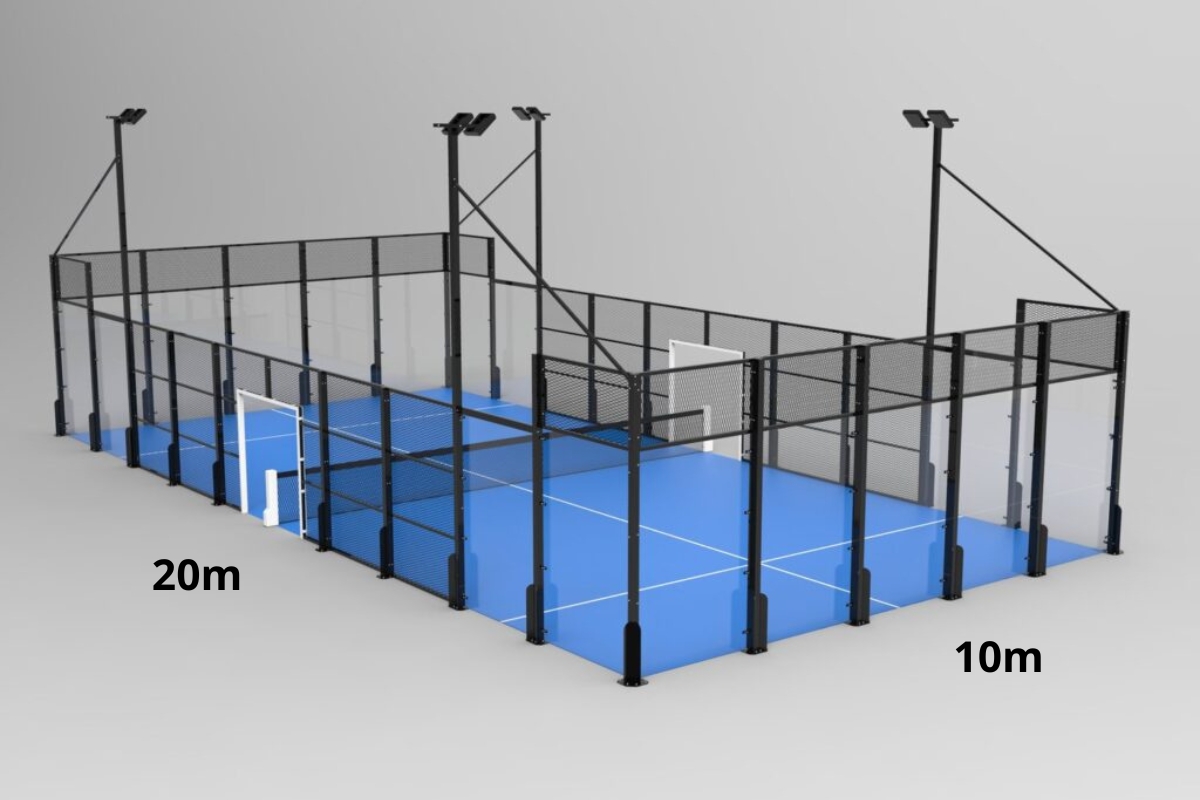
A padel court is 66 feet long by 33 feet wide — about one third the size of a tennis court, and slightly bigger than a pickleball court. The court is fully enclosed, with glass walls on the back and lower sides and steel mesh above. The walls are part of the game and what make padel so unique — players can let the ball bounce off the back glass and play it back over the net, or hit it off the glass directly. This combnes elements of both squash and tennis to the game strategy.
Here is what the court is made of:
- Glass panels: Tempered safety glass on the back walls and lower side panels. Tempered glass is a type of safety glass heat-treated to be up to four times stronger than regular glass - it’s is required because if broken, it cracks into small blunt pieces instead of sharp shards.
- Mesh enclosure: Steel or aluminum mesh on the upper panels and above the glass line.
- Net: 3 ft (36 inches) at the ends and and slightly lower (34.6 inches) in the center. This is a bit shorter than a tennis net which measures 42 inches on the sides and 36 in the center.
- Surface: Artificial turf with sand infill. Think of like like a turf soccer field with extra sand mixed in. This surface gives the right amount of player grip and ball bounce.
- Lighting: Proper LED lighting is required for any court used at night — budget $10,000 to $20,000 for a single court.
- Foundation & anchoring: Steel posts are set directly into the concrete slab via anchored footings, with depth determined by the manufacturer spec and local wind load requirements. The full court system weighs 3 to 4 tons, with individual glass panels coming in around 400 pounds each — the slab has to be properly engineered to carry that load, and installation requires a trained crew with the experience to handle that kind of weight safely.
None of these are optional for a regulation court. Cutting corners on any of them affects player safety, how long it lasts, and whether people actually like playing only our courts.
Why Padel Court Construction Is More Complex Than Most People Expect
A pickleball court is relatively straightforward. You hire a local concrete crew, pour a slab, apply surface coating, and paint the lines. Most of the vendors are local and the whole supply chain is domestic.
A padel court is different. There are three separate components that have to come together on the same job site at the same time, and each one comes from a different source.
First, you need the court system itself. The structural steel frame, tempered glass wall panels, and steel mesh enclosure all come from a padel court manufacturer. In 2026, there are a handful of US-based manufacturers and many more international ones, primarily from Spain and Latin America, where the industry has decades of history. That system gets manufactured in a factory and shipped to your site. There are separate companies that also make the nets and turf material.
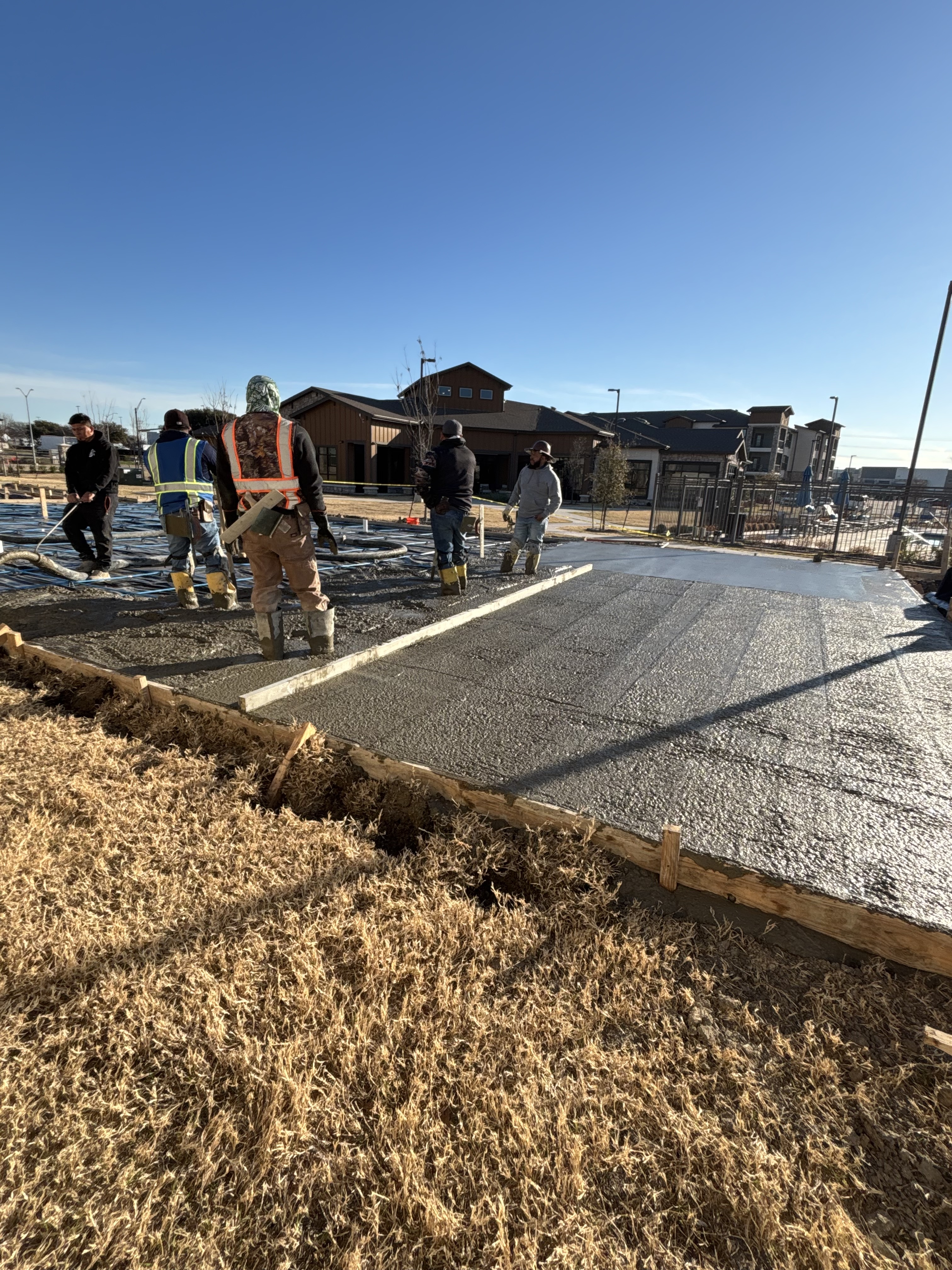
Second, for new courts you need a local concrete crew to pour your foundation before any court components arrive. The slab needs to be engineered correctly for drainage and the structural load of the court itself. If the foundation is off, everything built on top of it will have problems.
Third, you need a certified installation crew to assemble the court once the materials arrive. Most international manufacturers have historically flown their own teams to the US to do this. That model works, but it is expensive, inflexible on timing, and creates real coordination risk when the install crew’s schedule does not align with when your foundation is ready and your materials actually arrive.
This three-party supply chain is the main reason padel construction in the US has been complicated. We built US Padel Court Builders specifically to manage all three, because no one else was doing that from the US side.
Step 1: Site Assessment and Project Planning
Before anything else, you need to understand what your site can actually support.
A standard padel court measures 20 meters by 10 meters, or 66 by 33 feet. Each court needs a minimum footprint of roughly 69 by 36 feet to include access space for players. For multi-court facilities, you typically need even more clearance between courts and ideally a social area nearby.
For outdoor builds, orientation matters. Courts oriented north to south avoid the worst direct sun during play. Drainage is critical, especially in markets with lots of rain. A site that looks flat may have grading problems that add cost and time to the foundation work.
For indoor builds, the first thing to assess is ceiling height. The minimum is 24 feet clear. At that height, play is functional but lobbing (the most important shot in the game) is restricted. o 36 feet is the optimal range for a full playing experience. Many warehouse conversions assume that a lower-than-ideal ceiling won’t matter and only discover it once players start coming to their courts.
Site assessment also drives the permit strategy. A commercial outdoor installation in Miami-Dade County has very different requirements than an indoor club build in suburban Dallas. Getting clarity on the permit path early prevents the most common cause of project delays.
Step 2: Court Type and Manufacturer Selection
Padel courts come in two primary styles. Panoramic courts feature full glass walls on all sides, giving the court an open, modern look with maximum sightlines. Classic courts use a combination of glass on the back walls and steel mesh on the sides, which adds structural resilience and is often preferred in higher-wind environments.
Both are regulation compliant. The choice comes down to aesthetics, budget, and your local engineering requirements.
Manufacturer selection is where most first-time builders spend too much time on price and not enough on fit. The questions that actually matter are: What is the manufacturer’s lead time and how does it align with your foundation timeline? Are their installation crews certified and available in your region? What is their track record for US projects specifically? Do they have local warranty support, or does every service call require an international team?
US-based manufacturers offer faster lead times, no import complexity, and no tariff exposure. International manufacturers, primarily European and Latin American brands, often offer competitive pricing and deep manufacturing experience. We work with both and recommend based on what fits the specific project. For full cost context, see our padel court cost guide.
Step 3: Foundation and Site Preparation
Foundation work begins before any court equipment arrives. For new builds on raw land or sites without an existing concrete slab, this means excavation, grading, sub-base preparation, and pouring a reinforced concrete slab.
The type of slab matters. Courts in high-wind regions need deeper anchor points for the structural steel posts. Courts in heavy-rain markets need engineered drainage to prevent water pooling under the turf surface. Outdoor slabs should also be poured with a slight slope — typically 1 to 2 percent — so surface water moves off the court rather than sitting under the turf. An indoor court mainly needs a flat, solid platform to install the court with less concern for wind and weather.
Outdoor courts also typically require deeper footings or a perimeter ring beam to anchor the structure against wind loads, which is especially important for panoramic courts with large glass panels that catch significant wind. Indoor courts built on an existing slab have a simpler foundation job since the building itself handles wind exposure, but the slab still needs to be evaluated for thickness, flatness, and whether it can accept the anchor hardware for the steel posts. A slab poured for warehouse storage, for example, may need reinforcement before it can support a padel court system. Understanding which situation you are in early shapes both the budget and the timeline.
Budget $30,000 to $50,000 for foundation and site prep on a single new-build court. If you already have a concrete slab in good condition, this cost can be significantly reduced, but the slab still needs to be assessed for drainage and anchoring before court installation begins.
Timing is critical here. The foundation needs to be complete and cured before installation crews arrive and materials are on-site. Coordinating those three timelines, foundation completion, material delivery, and crew availability, is where poorly managed projects lose weeks.
Step 4: Permitting
Permit requirements vary by municipality and can be the longest phase of the entire project.
Most permanent outdoor padel court installations require a building permit covering the foundation and a structural permit for the court system. Some jurisdictions also require stamped engineering drawings, wind load calculations, and environmental review. Coastal counties in Florida operate, for example, with strict wind load requirements.
Start permitting as early as possible. The permit application can often be submitted in parallel with manufacturer lead time, meaning permitting and manufacturing happen simultaneously rather than sequentially. That alone can save 6 to 10 weeks on a project timeline.
We work with partner structural engineers on every project to prepare and submit the permit package. This is not optional for any permanent installation and it is not something to hand off to a local contractor who has never pulled a padel court permit before.
Step 5: Court Installation
Once the foundation is ready, materials are on-site, and permits are in hand, installation moves quickly. A single court typically takes 3 to 4 days for a certified crew to complete — 3 days for the court system and 1 day for turf. Multi-court projects scale by adding crew size, not by adding days per court.
The installation sequence starts with setting the structural steel posts into the foundation anchor points. The steel frame goes up next, followed by the tempered glass wall panels and steel mesh enclosure. Surface work comes last, with professional-grade artificial turf installed over the slab and the net rigged to regulation height.
We cover the installation process in detail — including our local crew network and what drives cost variation — on our dedicated padel court installation page.
One note on installation crews: the quality of the installation directly affects how the court plays and how long it lasts. Glass panels that are not properly anchored flex under wind load. Turf that is not properly laid creates surface irregularities that impact ball bounce or cause tyou to trip. Use certified crews who have installed the specific manufacturer system you purchased.
Step 6: Launch and Operations Setup
The court is built. That is the beginning, not the end.
Before your first players arrive, you need booking software configured, pricing set, and a plan for how you are going to find and retain your players. The padel facilities that struggle in year one are almost always the ones that focused entirely on construction and did not think about operations until after opening day.
Booking software, player acquisition strategy, programming, and community building all need to be in place at launch. For a full breakdown of the business side of opening a padel facility, read our guide on how to start a padel facility in the US.
What We Handle for You
Every phase above is something we manage directly, from site assessment through launch support, at no added cost to your project.
If you’re planning a build, the fastest way to get real numbers for your site is a free consultation.
Frequently Asked Questions About Building a Padel Court
How long does it take to build a padel court?
A typical padel court project runs 3 to 6 months from initial planning to opening day. The biggest variable is shipping, which can vary from a few weeks to several months based on the lead time of the manufacturer you choose and domestic and international timelines. Court installation itself typically takes 3 to 4 days per court (3 days for the court system, 1 day for turf), once the foundation is ready and materials are on-site. Multi-court projects scale by adding crew size rather than days per court.
Do you need a concrete foundation for a padel court?
Yes. A properly poured foundation slab is required for any permanent padel court installation. This can be a brand new concrete slab poured on raw land, or often times an existing facility with strong flooring. If you have an existing slab in good condition, it can reduce cost significantly. An improper foundation can result in the glass panels breaking over time or water pooling on the court.
Can I buy a padel court and install it myself?
Technically possible, but not recommended. Padel court installation requires certified crews trained on the specific manufacturer system and the basics of working with tempered glass panels. Working with glass and installing such heavy, expensive materials is not a DIY task. Most manufacturers void warranties on courts not installed by their certified partners.
What permits are needed to build a padel court in the US?
If you are building from scratch, you first need to confirm that your intended site is zoned for recreational or sports facility use. Then, most outdoor projects will require a feasibility study and building permit at minimum. Requirements beyond that vary by municipality, including specific wind load calculations for the glass panels. Coastal counties and HOA communities typically have stricter requirements. Budget 2 to 4 months for permitting depending on your location.
How much does it cost to build a padel court in the US?
A complete single outdoor padel court project in the US typically costs between $50,000 and $100,000. That includes the court system, foundation and site prep, lighting, and permits and varies based on your existing site conditions. See our complete padel court cost guide for a full breakdown by line item.