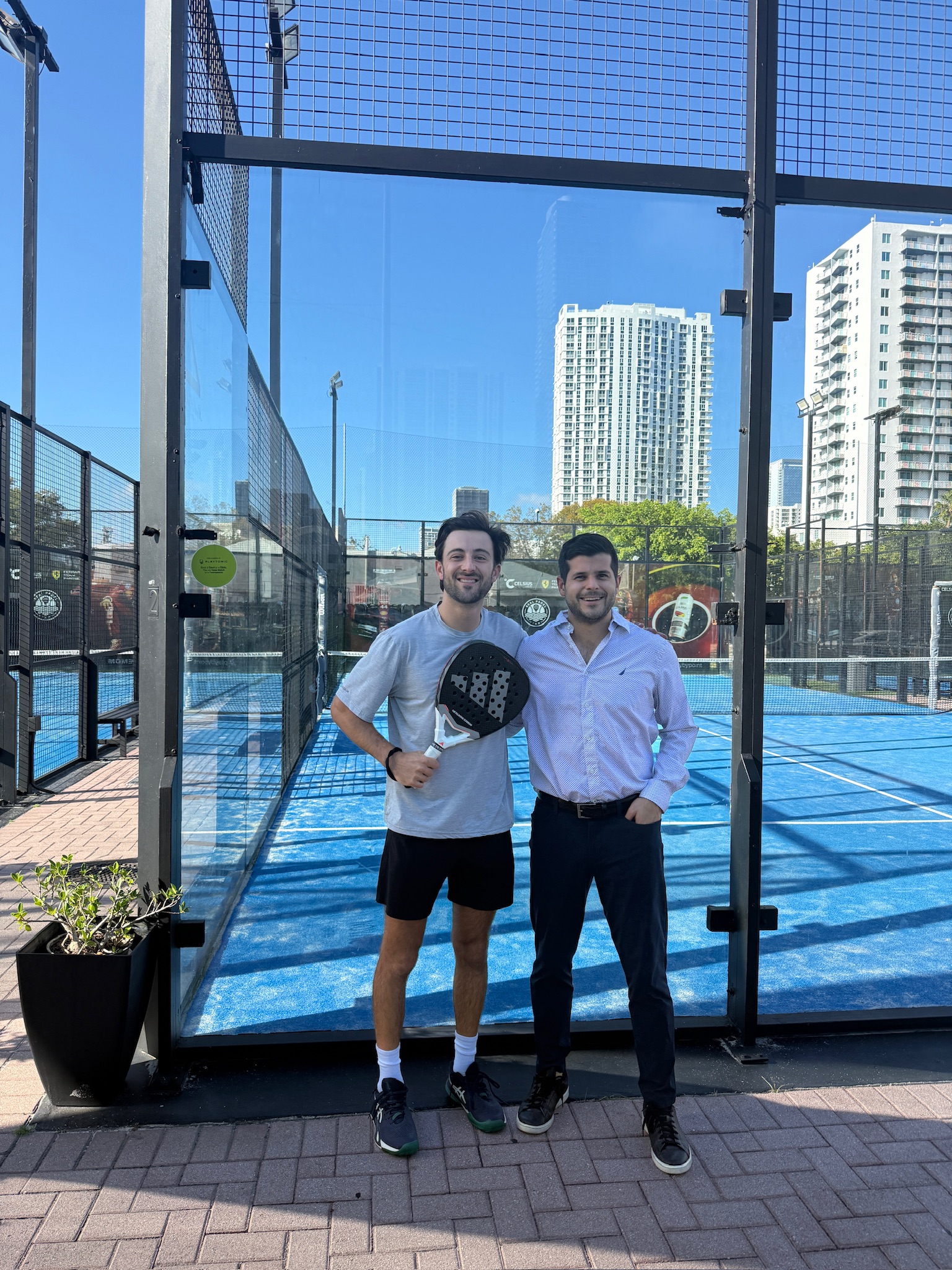
Every week we talk to people who are excited about padel and seriously considering building a padel club. Some of them are ready. Many of them are not, not because they lack the resources or the drive, but because they are focused on the wrong things.
The most common mistake we see: people spend months researching court manufacturers and court prices, then show up to a first conversation without having thought through the market, the location, the operations model, or how they are going to attract players on day one.
Courts are the hard part of the facility. But everything around the courts is what makes a facility actually work.
This guide covers both.
Part 1: Before You Think About Courts
1. Choose the Right Market
The first question is not what kind of courts to build. It is whether your market can support a padel club at all.
Padel is growing fast in the US and there is tons of white space opportunity. Cities that already have some padel communities, like Miami or New York, still have more demand for courts than supply. Beyond that, most major metros and mid-size cities are still nearly untapped. That said, the newness also comes with challenges. Will there be players who want to play padel in your area right away? If so, how will you find them?
Before committing to a location, ask:
- Is there an existing padel or racquet sports community nearby?
- What is the international demographics in the area? There may be huge communities of residents who grew up playing padel in their home countries.
- How many padel courts already exist within a 30-minute drive?
- What is the realistic addressable player population?
Being first in a market is definitely an advantage, but only if you are prepared to capture it.
The supply and demand gap is unlike anything in US sports history. With 1.1 million players and roughly 1,000 courts nationwide, nearly half of them clustered in Florida and Texas, players across most of the country have nowhere to play. That is not a market risk. That is a market opportunity. The question is not whether padel will grow. The question is whether you will be the one who builds the courts when it does.
2. Nail the Location
Even in a strong padel market, location matters enormously.
A padel facility needs to be easy to get to. That sounds obvious, but we have seen projects fail because the courts were beautiful and the market was there, but players did not want to deal with the drive or the parking situation. Padel is a social sport that people play two to four times per week. Convenience is a major factor in whether someone becomes a regular.
Key location questions:
- Is it accessible by car with adequate parking?
- Is it visible or discoverable, or buried somewhere players will not find it organically?
- Is there room to expand if demand grows?
- Indoor or outdoor? This depends heavily on your climate and your target player. Outdoor courts cost less to build but limit year-round play in colder or extremely hot markets. Indoor facilities require more investment but deliver consistent revenue regardless of season.
3. Get Clear on Your Business Model and Operations
A padel facility can operate as a revenue-generating business or as an amenity that supports another business. Both are valid but they require completely different approaches.
A standalone padel club needs a clear revenue model from day one:
- Pay-per-play court reservations
- Membership packages (monthly or annual)
- Programming and clinics
- Corporate bookings and events
- A hybrid of the above
Plus, with any good business model comes the right operating software. Once you align on your strategy, you will want to ensure you have the right software from day one to run your facility, everything from booking courts and taking payments to player marketing and programming. We have evaluated every major platform in this space and set up the right software for every facility we have worked with, from small single-court clubs to multi-court commercial facilities.
A padel amenity at a hotel, resort, or residential development is designed to attract guests or residents rather than generate direct revenue. The success metrics are different. The operational requirements are simpler.
Knowing which you are building before you start shapes every decision that follows.
4. Understand Your Space Requirements
A standard padel court measures 20 meters by 10 meters, or roughly 66 feet by 33 feet. Each court needs a minimum footprint of about 69 by 36 feet including surrounding access space. For a multi-court facility, you also need room for seating, a check-in area, and ideally a social space.
If you are converting an existing building, a warehouse, a gym, a former tennis facility, ceiling height is usually the first thing to check. Most people do not realize it, but lobs are actually the most common shot in padel. Low ceilings can have a huge impact on player experience. Minimum ceiling height for indoor courts is 24 feet clear. Optimal is 30 to 36 feet for the best playing experience.
Part 2: The Courts
Once you have validated your market, secured your location, and defined your business model, you are ready to think seriously about courts.
Court Type
Padel courts come in two primary styles. Panoramic courts feature full glass walls for a modern aesthetic and open sightlines. Classic courts combine glass and metal mesh for added structural resilience. Both are regulation compliant. The choice comes down to aesthetics, budget, and local wind load requirements.
Manufacturer Selection
This is where most people get overwhelmed. There are US-based and international manufacturers, each with different price points, lead times, and quality levels. We covered this in detail in our padel court cost guide, but the short version is: do not choose based on price alone. Choose based on quality, lead time fit for your project timeline, and who has the best track record for your type of build.
We work with a vetted list of manufacturers in both US and international markets and source based on what is right for each specific project.
Foundation and Site Prep
If you are building on raw land or a site without an existing concrete slab, foundation and site preparation is a significant cost and timeline item. A properly engineered foundation is not optional. Padel courts are permanent structural installations that need to perform for years. A slab that is not properly leveled will compromise the court system above it.
Permits and Engineering
Permitting requirements vary by city and county. Some jurisdictions have a straightforward process. Others require stamped structural engineering drawings, wind load calculations, and multiple review cycles. Start this process early. Permit timelines are the most common cause of project delays.
We work with partner engineers to manage permitting on every project.
For a detailed cost breakdown of everything above, read: How Much Does a Padel Court Cost in the US?
If you want to understand the full construction process before your first call, read our step-by-step guide to building a padel court.
Part 3: Everything Around the Courts
This is the part most people underestimate. It is also the part that most determines whether a padel facility thrives or struggles.
Operations Software
How are players going to book courts? How are you going to manage memberships, collect payments, schedule programming, and communicate with your community?
There are several padel-specific court management platforms available. Choosing the right one before you open is important because migrating your player database and booking history after launch is painful. We help every client evaluate and set up the right platform for their facility type and size.
Marketing and Player Acquisition
A beautiful facility with no players is not a business. Player acquisition needs to start before you open, not after.
Effective early strategies include:
- Soft launch events and free play days to seed the community
- Partnerships with local tennis and pickleball clubs whose members are natural padel converts
- Social media targeting the Latin American and European communities in your area
- Corporate outreach to companies interested in team events
- Working with local padel players or instructors who can bring their networks
The padel community is tight-knit and word-of-mouth driven. Your first 50 members will bring your next 150 if the experience is right.
Retention and Community Building
Getting players through the door once is the easy part. Keeping them is where facilities win or lose.
The padel clubs that build lasting communities share a few traits. They run regular programming, leagues, clinics, social mixers. They have a social space where players want to hang out before and after matches. They create a culture, not just a court rental business.
Whether that social element is a bar, a coffee station, lounge seating, or organized events depends on your market and your model. But some version of it matters. Padel is fundamentally a social sport. Players are not just looking for a place to play. They are looking for a community.
What Success Looks Like in Year One
Define this before you open. Not just revenue targets, but leading indicators:
- How many unique players used the facility in month one? Month six?
- What is your court utilization rate during peak hours?
- What percentage of first-time visitors came back a second time?
- How many members do you have at the 90-day mark?
These metrics tell you whether you are building a community or just a facility.
The One-Stop-Shop Approach
Most padel companies will sell you courts. Some will help you build them. Very few will help you think through everything above.
We built US Padel Court Builders to be the partner that takes you through this entire process, from validating your market through opening day, at no added cost.
If you’re seriously considering opening a padel facility, we’d love to be your first call.
Frequently Asked Questions About Starting a Padel Facility
What are the first steps to starting a padel club?
Before anything else, you need to lock down your location. Nothing actually moves until you have land or a building secured. Figuring out your location, whether you are renting or buying, and whether it is indoor or outdoor affects everything else that follows. That decision sets your timeline, since facility access and permitting can take months, and it shapes the business decisions that come after it. Market demand and a clear business model matter too, but you can work on those in tandem once your land is secured. We are still early in the US padel market and there is real opportunity in almost every major metro, but the operators who get stuck are usually the ones who started shopping for courts before they had a club locked down.
How much does it cost to open a padel facility?
A single outdoor court project runs $60,000 to $75,000 all-in. A four-court facility typically starts around $150,000 to $200,000 and varies based on existing site conditions and the need for add-ons like pouring a foundation or installing lights. Indoor facilities often cost less in pure court costs because you already have a foundation, but leasing or purchasing the building can be pricier than outdoor land. See our complete padel court cost guide for a full breakdown by line item.
Do I need prior sports business experience to open a padel facility?
No, but you do need a clear operations plan before you open. The facilities we have seen struggle are not the ones without sports backgrounds. They are the ones that focused entirely on the courts and did not think through player acquisition, booking software, programming, and community building until after they opened. We walk every client through the full business model before any construction begins.
How long does it take to open a padel facility from scratch?
A typical project runs 6 to 12 months from initial planning to opening day. The biggest variable is permitting, which can range from 4 weeks in straightforward jurisdictions to 6 months in coastal or highly regulated markets.
Should I build indoor or outdoor padel courts?
This is one of the key questions. It depends on your climate and your business model. Outdoor land can be cheaper to rent, but requires more construction costs to prep your foundation. Outdoor courts also run the risk of lower utilization if you have extreme weather in your area, or if your location has courts without amenities like seating, food, and bathrooms. Indoor courts require more upfront investment in the real estate but deliver year-round revenue regardless of weather. In markets with cold winters or extreme heat, indoor is often the better long-term business decision. If you are considering a northern market, see our notes on working with padel court builders in Illinois as a case study for how we approach cold-climate indoor builds.
Do you work with investors and developers, or only owner-operators?
Both. We work with padel facility entrepreneurs, hotel and resort groups, country clubs, and real estate developers. The project management process is the same regardless of client type. Our service covers the full build at no added cost to the project, because we earn through our manufacturer and installer partnerships.
If you are seriously thinking about opening a padel club in the US, we would love to be your first call.