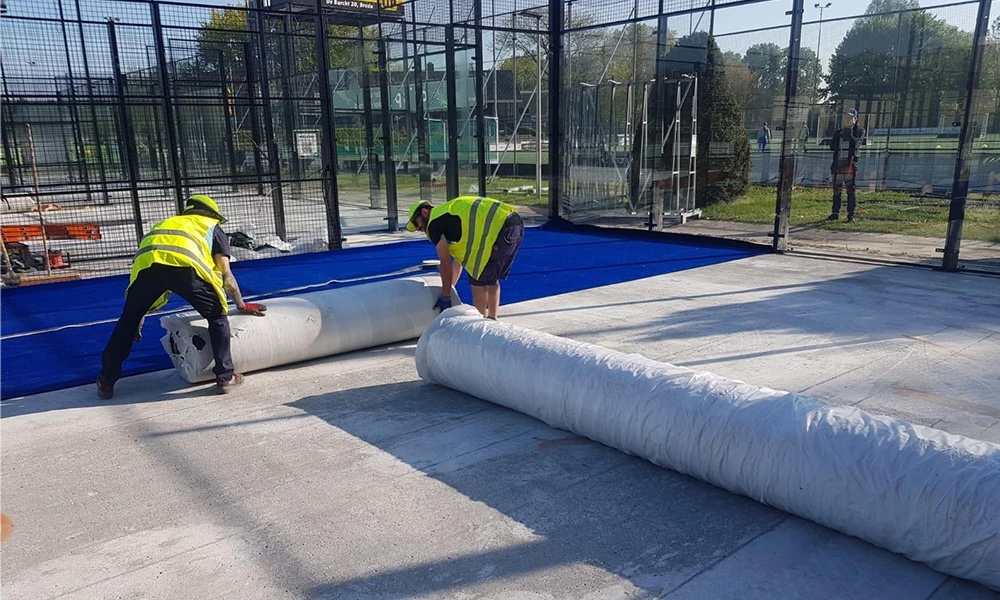
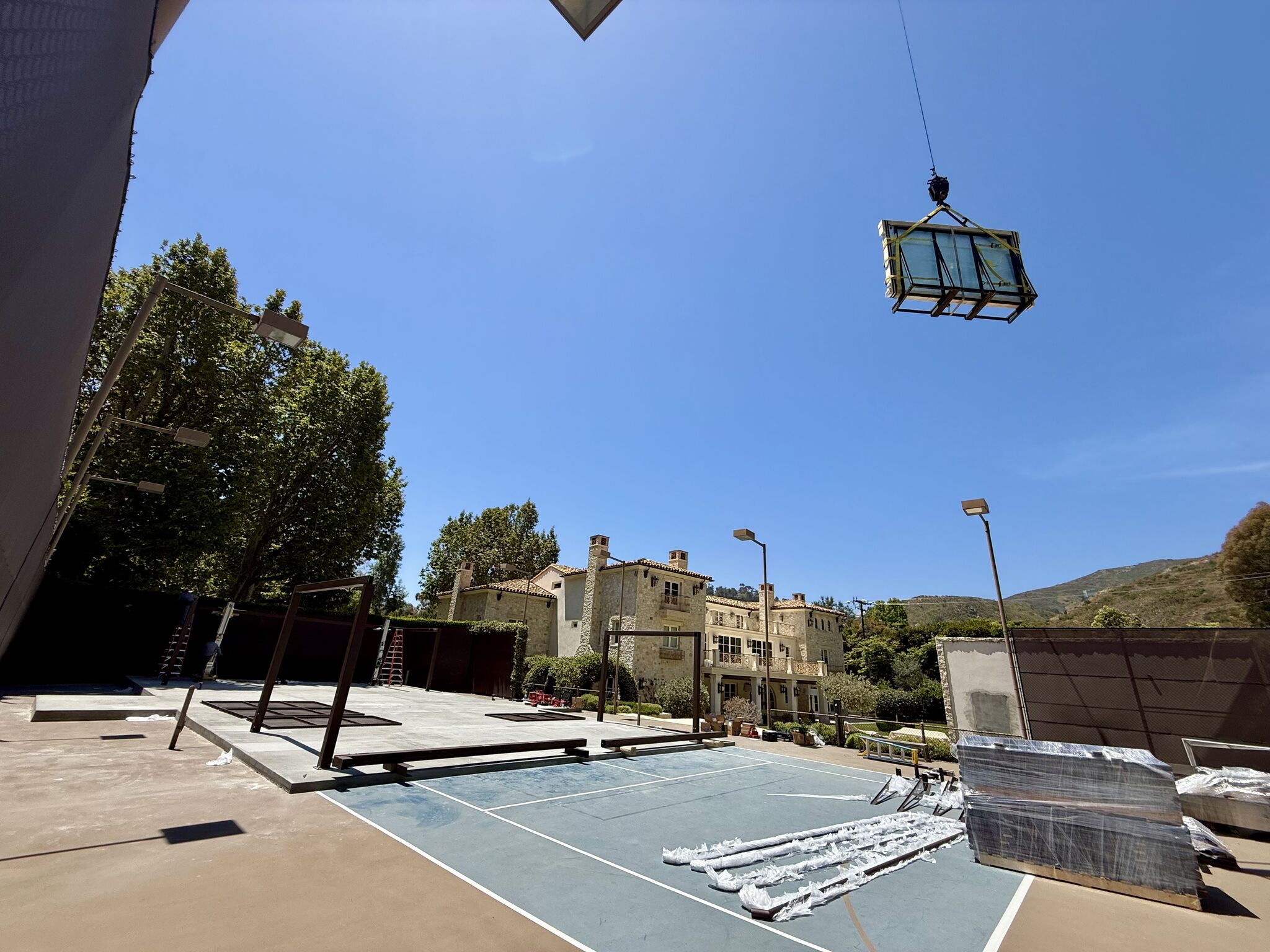
We specialize in the trickiest part of the padel court build process — getting the court system off the truck and installed on your property, with a local crew that knows what they're doing.
Schedule Your Free ConsultUS Padel Court Builders manages all three key steps of the padel court build process:
Most padel court companies are manufacturers. They build glass panels in a factory (often overseas), sell you a court system, and ship it to your site. What happens after that can be the most difficult part. Some fly their own installation teams out, which sounds convenient until you see the travel costs.
Others might sell you the court system and ask you to find your own installer. The problem is padel is very new to the US and most markets do not have experienced local installers.
We built the solution by leveraging our sister company, Backyard Pickleball Builders — a vetted network of local construction crews operating in all 50 states, now trained on padel court systems. Your installer is almost always within driving distance. No flights, travel costs, or coordinating between multiple parties who have never worked together.
Before any court system arrives at your site, the ground beneath it needs to be right. If you have an existing concrete slab, we send someone local to assess whether it meets the spec required for your court system. If you need a new foundation, we coordinate the pour with a local concrete crew.
We manage the logistics between the manufacturer and your site. That means tracking the shipment, confirming delivery windows, and making sure your crew is ready when the system arrives. Padel court systems are large and expensive. Sitting in a parking lot for a week waiting for an installer is not an option.
Our installation crews across the country are being trained every week on new padel court systems. Depending on the manufacturer and court type, installation may also include an on-site training component — either from the manufacturer's team, from our own, or both. We coordinate all of it. You have one point of contact throughout.
Once the court is up, we walk the completed installation before you sign off. Glass system, turf surface, net — everything gets checked before we close the project. We will even play a few points with you to help break the new courts in (both of our founders are high-level padel players).
The padel installation problem in the US is not a skills gap. It's a network issue. There are experienced court builders in every region of the country, but most of them have never installed a padel court and don't have relationships with padel court manufacturers, because until recently there were almost no padel courts to install.
We solved this by training our existing pickleball construction network on padel court systems. These are crews we have worked with for years across hundreds of pickleball court builds. They know how to read specs, work with heavy equipment, and deliver finished courts.
We leveraged our vetted local crews through a certification process so we can bring better quality to your project for lower costs. Your installer is almost certainly within driving distance of your site. No travel markup. No scheduling around flights.
You'll have a single point of contact throughout, and that trust and accountability filters down to our installer teams. You don't have to worry about coordinating schedules or making sure the install crew is trained on your specific court specs.
We're managing an upcoming project that will be the first padel court ever built in Alabama. Like most regions of the USA, there is no existing padel installation infrastructure in the state. A few years ago this project would have required flying in a manufacturer team from out of state, coordinating with a concrete crew they had never met, and hoping it all came together.
Instead, we are using our existing pickleball construction network already operating in Alabama. Local crew. Local knowledge. No travel costs passed to the client. That is exactly what this network was built for — making it possible to build courts anywhere in the US without the logistical overhead that has held the market back.
Installation cost varies more than most people expect, and the variation is almost always driven by a few specific factors.
Travel distance. Because our network is local, most projects involve minimal travel cost. Compare that to manufacturer-supplied installation teams flying in from out of state, where travel, lodging, and per diem can add thousands of dollars to your project before a single panel goes up.
Training. The US padel market is still young. On some projects, especially with newer court systems or first-time builds in a given region, installation includes an on-site training component. This might involve a representative from the manufacturer, someone from our team, or both. More people on the ground during a training install adds cost — but it also means you are building local expertise that benefits future projects in your area. Site conditions. A clean existing slab that meets spec is the cheapest scenario. A site that needs excavation, grading, or a full foundation pour adds cost and time. We assess this upfront so nothing surprises you mid-project.
For a single court project, installation typically runs $8,000 to $12,000 per court depending on site conditions and location.
Installation for a single court typically runs $8,000 to $12,000 depending on your site conditions and location. Full project cost including the court system and foundation ranges from $60,000 to $75,000. We provide detailed quotes based on your actual site.
No. We manage installation through our own vetted network of local crews. You do not coordinate between a manufacturer and a separate contractor — we handle both sides and you have one point of contact throughout the project.
Yes. Our installation network covers all 50 states through our sister company Backyard Pickleball Builders. We are currently managing the first-ever padel court installation in Alabama as an example of what that reach makes possible.
We send someone local to assess whether your existing foundation meets the spec required for your court system before anything ships. If it does, we proceed. If it needs work, we tell you upfront and coordinate the scope as part of the project.
We manage installation as part of a fully turnkey project. Most of our clients are building a business, not just a court. We treat it that way.
That means before the first panel arrives on site, we have already helped you secure permits, finalize your court layout, and source the right manufacturer for your budget and timeline.
On top of that, we advise on all of the off-court operational decisions — what booking software to use, how to market to new players, and launch planning. We're your partners for the long run and here to support you every step of the way.
Every installation project starts with a site assessment and a real quote based on your actual conditions. Not a generic range — numbers specific to your project.
Get a Free Quote